Dates are not only an iftar snack. Behind the healthy-food trend, dates have become a serious food-industry raw material — from date paste for cake fillings and energy bars, to date syrup and powder as natural sweeteners, to whole dates for toppings and catering mixes. If your business is a bakery, cafe, healthy-snack maker, caterer, or food factory, your date needs differ entirely from a retail buyer's. You need stable supply, consistent pricing, the right grade, and large packaging. This article covers bulk-date procurement through a production lens.
Why the Food Industry Loves Dates
Dates offer a combination other sweeteners struggle to match: intense natural sweetness, a texture that becomes a binding paste, plus a healthy image thanks to their fibre, potassium, and antioxidants. According to USDA FoodData Central, one Medjool date (about 24 grams) contains roughly 66 calories, 16 grams of natural sugar, and 1.6 grams of fibre, along with potassium, magnesium, copper, and B vitamins. This is why dates are popular as a refined-sugar replacement in "better-for-you" products.
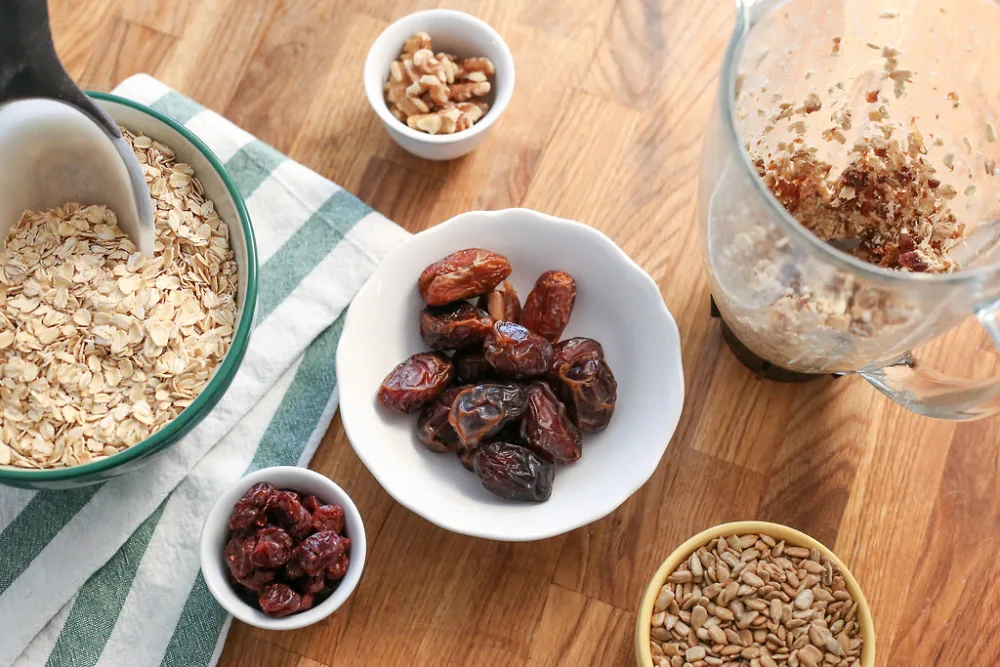
In snack-bar formulation, date paste is often the main ingredient. Research and industry practice show date paste used at high concentrations — around 55-90% in some energy-bar formulas — as both binder and source of sweetness, so makers simply add a protein source because dates are high in carbohydrate but low in protein. Indonesian food-ingredient suppliers such as Delisari and Grouu even offer date paste, syrup, and powder as dedicated industrial natural-sweetener lines.
Which Variety for Which Application
Choosing the right variety saves cost and keeps products consistent. Here is a quick guide:
| Production Application | Suitable Varieties | Reason |
|---|---|---|
| Date paste & cake fillings (ma'moul, cookies) | Egyptian, Tunisian, economy mixed dates | Cost-efficient, easy to blend, neutral sweetness |
| Energy bars & healthy snack bars | Egyptian/Medjool as paste base | Good binding, intense sweetness, chewy texture |
| Premium toppings & stuffed dates (almond/chocolate) | Medjool, Sukari, Safawi, Mabroom | Large size, attractive look, soft texture |
| Beverages & smoothies (date syrup, juice) | Sukari, Egyptian, wet dates | Dissolve well, strong sweetness, caramel aroma |
| Hampers & event catering platters | Medjool, Sukari, Ajwa (premium segment) | High presentation value for guests |
For products blended into paste or syrup, the look of individual dates does not matter — taste, texture, and price do. This is where industrial grade earns its place.
Industrial Grade vs Retail Grade
Many producers do not realise they overpay by buying premium retail grade when the dates will be blended anyway. Understand the difference:
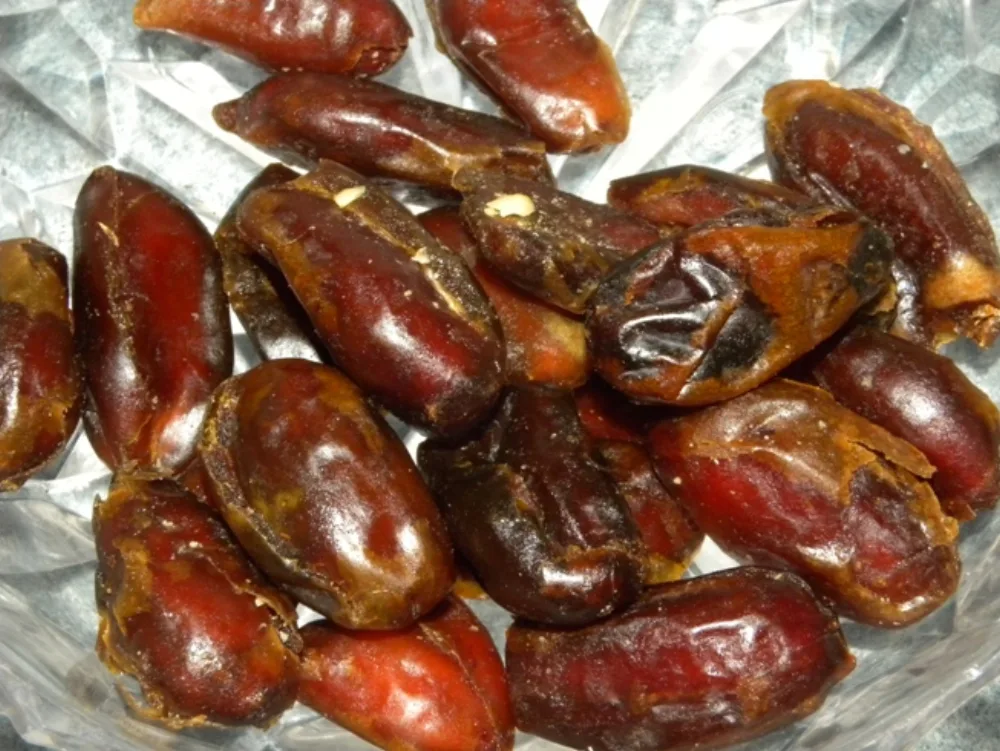
- Premium retail grade is chosen for whole shape, large size, and flawless appearance — important for selling by the piece or in hampers, but expensive.
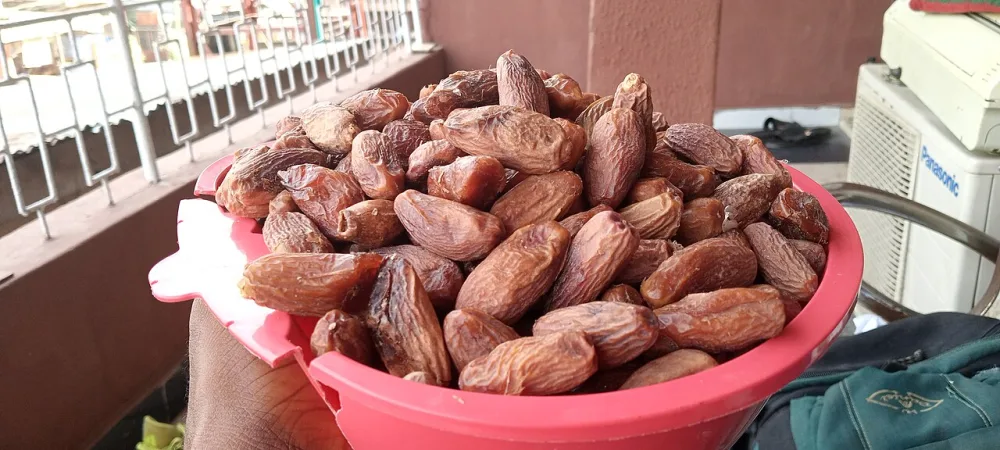
- Industrial / bulk grade prioritises taste and texture with looser appearance tolerances (uneven size or minor blemishes are acceptable), so the per-kg price is far more efficient — ideal for paste, syrup, fillings, and mixes.
Choosing industrial grade for the right application can cut raw-material cost significantly without lowering finished-product quality, because consumers never see the original date shape inside an energy bar or cake.
Large Packaging for Production
Production cannot practically run on 500-gram retail packs. For industry, procurement happens in large packaging: 5 kg and 10 kg cartons for mid volume, up to large 25 kg-plus sacks for factories and big caterers. Large packaging lowers the per-kg price and reduces packaging waste. Make sure your supplier can provide consistent packaging so your production and storage planning stays tidy. At kurmagrosir.co.id, workhorse varieties such as Egyptian dates come in large packaging designed precisely for high-volume needs.
Supply Consistency: The Lifeblood of Production
For producers, the biggest issue is not a momentary price, but consistency. Your product must taste the same every batch, and the production schedule cannot stop because dates ran out. Three things to secure from a supplier:
- Quality consistency between shipments: the same variety and grade so product taste and texture stay stable.
- Price consistency: a more stable price agreement for routine volume so your cost of goods is predictable — important because date prices spike before Ramadan.
- Stock availability: a supplier with adequate warehousing and cold chain that can guarantee supply year-round, not just in season.
This is the edge of buying from an importer with deep, continuous stock versus hunting the market every time you need it — the risk of running out and price swings is far smaller.
Food-Safety and Storage Notes in the Production Kitchen
Because dates become part of a product you resell, treat them as a serious food ingredient. Store in a cool, dry place or chiller per type, apply FIFO/FEFO rotation, keep away from strong-smelling materials, and inspect each delivery for pests and moisture. For products sold to market, also observe licensing rules such as BPOM and halal certification per applicable regulation; we present this as educational information, not legal or medical advice.
How to Start Procurement for Your Business
Practical steps for a bakery, cafe, snack maker, caterer, or factory entering dates as a raw material:
- Define the application (paste, syrup, topping, filling) then map the matching variety and grade.
- Request samples to test recipes before committing to large volume.
- Calculate monthly needs so you can negotiate a consistent volume price.
- Agree on packaging and delivery schedule in sync with your storage capacity and production rhythm.
Conclusion
Bulk dates are a valuable raw material for the food industry — naturally sweet, rich in texture, and healthy in image. The keys to success are choosing the variety and grade that fit the application (never pay retail grade for dates you will blend), buying in efficient large packaging, and above all securing supply that is consistent in quality, price, and availability. With a supplier that holds deep stock and a managed cold chain, your production keeps running steadily year-round, even when the date market is busy ahead of Ramadan.